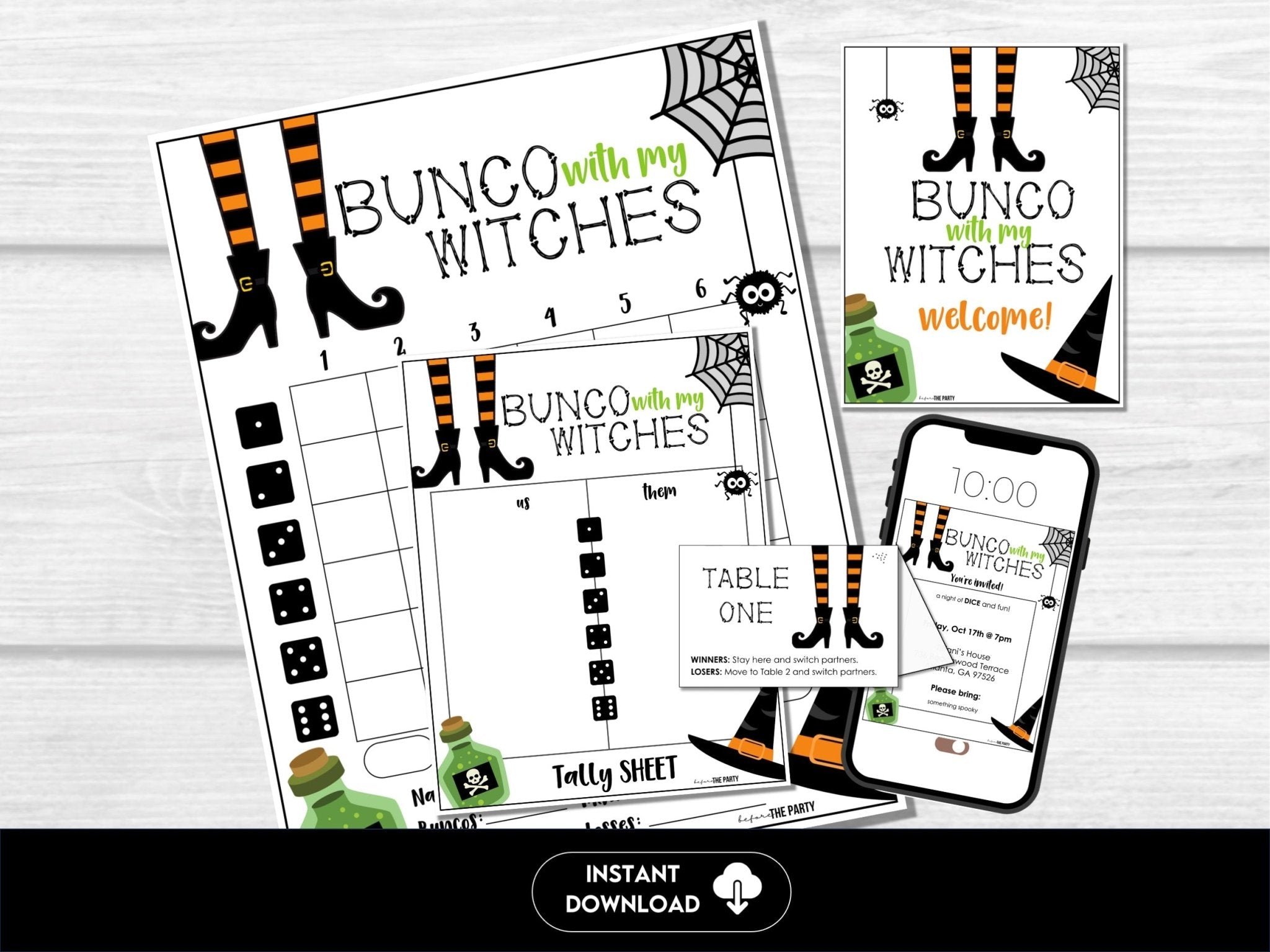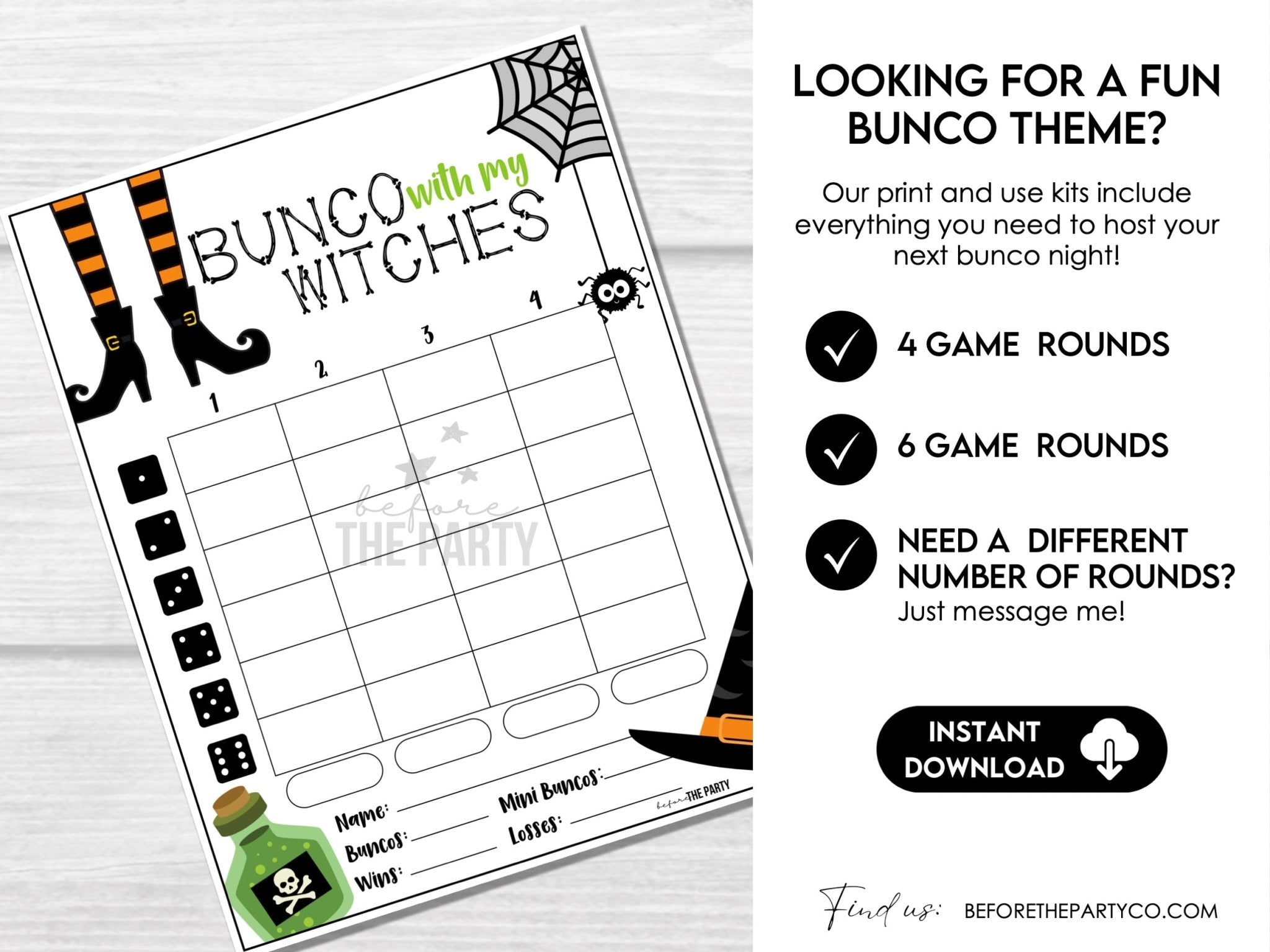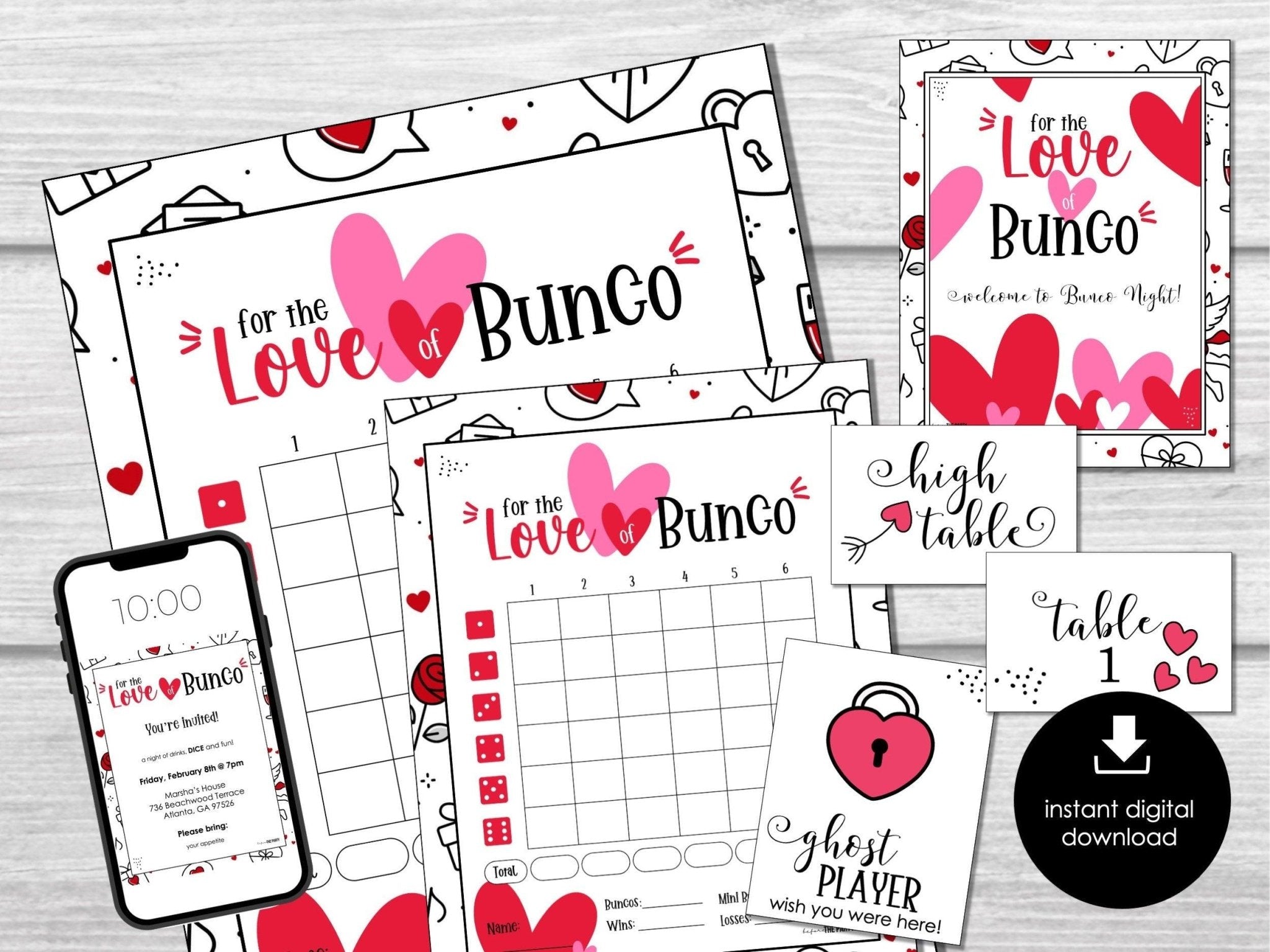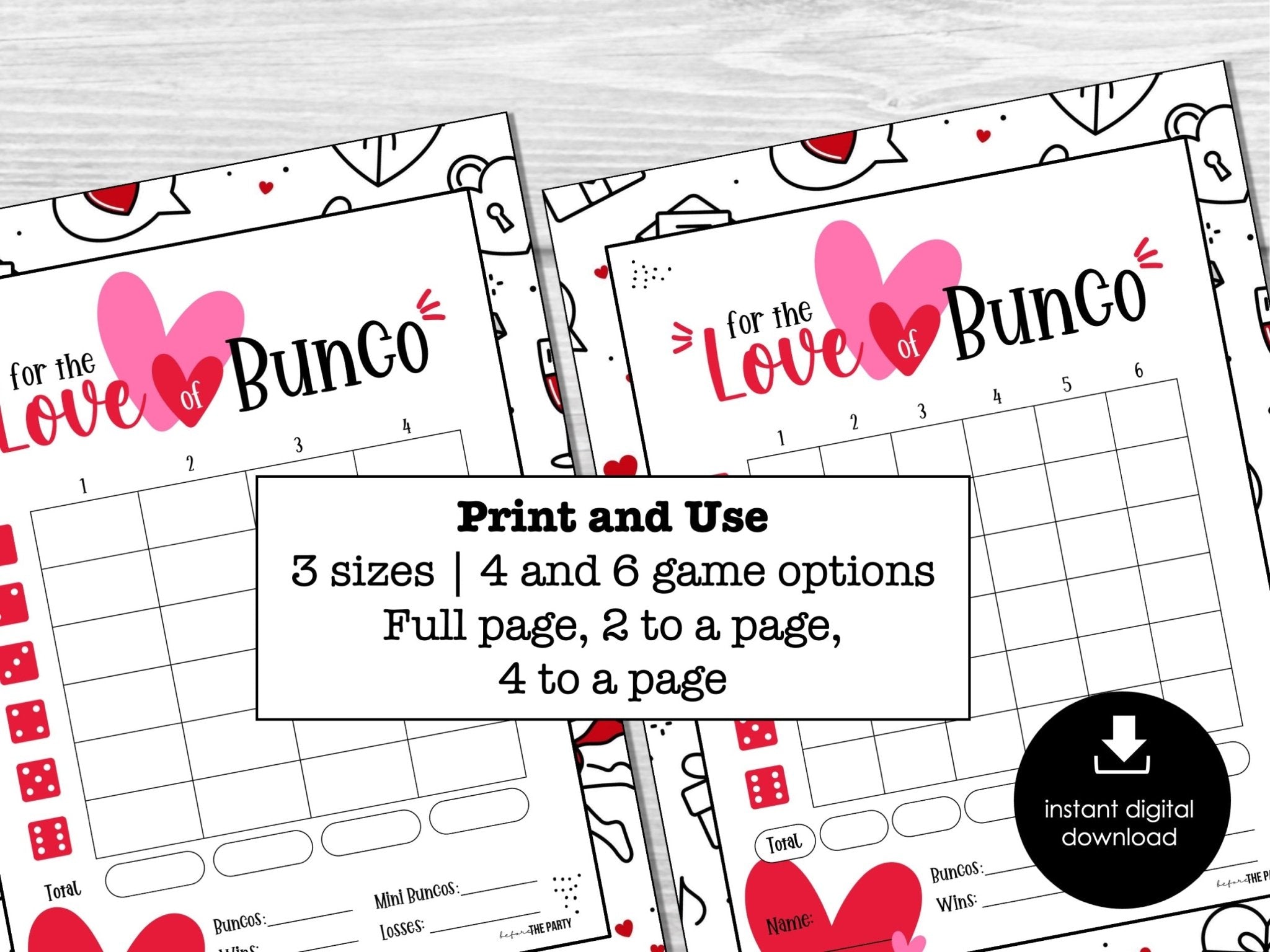
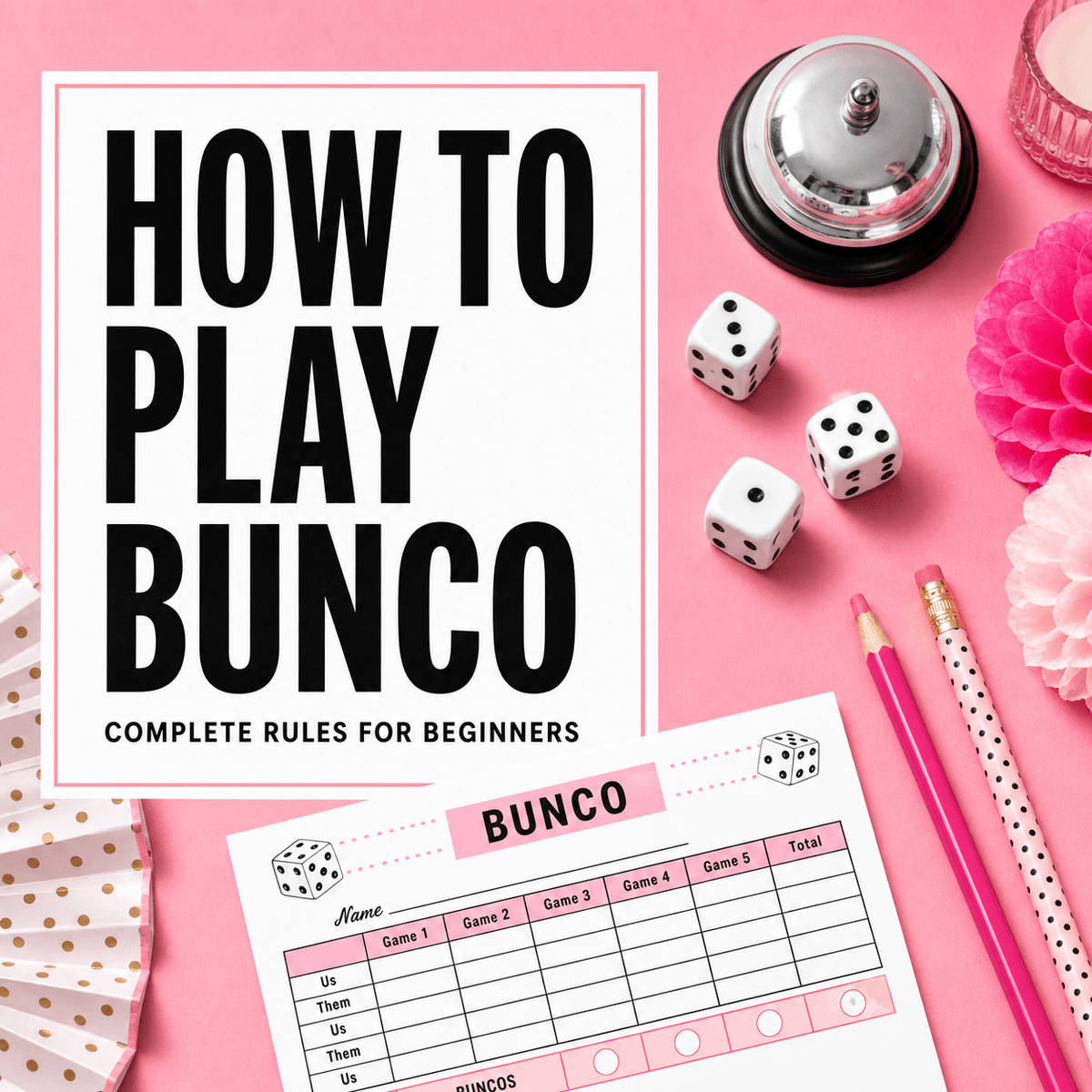
Learning how to play Bunco is easier than it looks. The game moves quickly, there is no strategy to memorize, and guests can learn the basics in just a few minutes. That is exactly why Bunco works so well for girls’ nights, neighborhood get-togethers, birthdays, holiday parties, and regular monthly game nights.
This beginner-friendly guide explains the classic 12-player version of Bunco, including setup, scoring, table rotations, and a few common house rules. Bunco groups often develop their own traditions, so decide on any variations before the first round and keep the rules consistent all night.
Make Your First Bunco Night Easier
A coordinated printable set removes the need to create scorecards, tally sheets, table signs, and invitations from scratch. The It's Bunco Time Modern Printable Party Set is a flexible choice for beginners and works in every season.

Shop the It's Bunco Time Printable Party Set
What Is Bunco?
Bunco is a social dice game usually played with 12 people divided among three tables. Players sit in teams of two and take turns rolling three dice. During each round, everyone tries to roll the number that matches that round: ones in round one, twos in round two, and so on through sixes.
The goal is not complicated strategy. It is to roll, score, rotate, meet new partners, and have fun. A complete game normally takes about two to three hours, depending on the number of sets, snack breaks, and how much chatting happens between rounds.
Bunco at a Glance
- Traditional number of players: 12
- Number of tables: 3
- Players per table: 4, divided into two teams
- Dice needed: 3 dice per table
- Rounds in one set: 6
- Main objective: Score points by rolling the round number
- A Bunco: Three dice showing the current round number
What You Need to Play Bunco
One of the best things about Bunco is how little equipment it requires. Before everyone arrives, gather:
- 12 players, or a flexible substitute plan if someone cannot attend
- Three tables with four chairs at each table
- Three dice for each table
- One bell for the head table
- One pencil or pen for each player
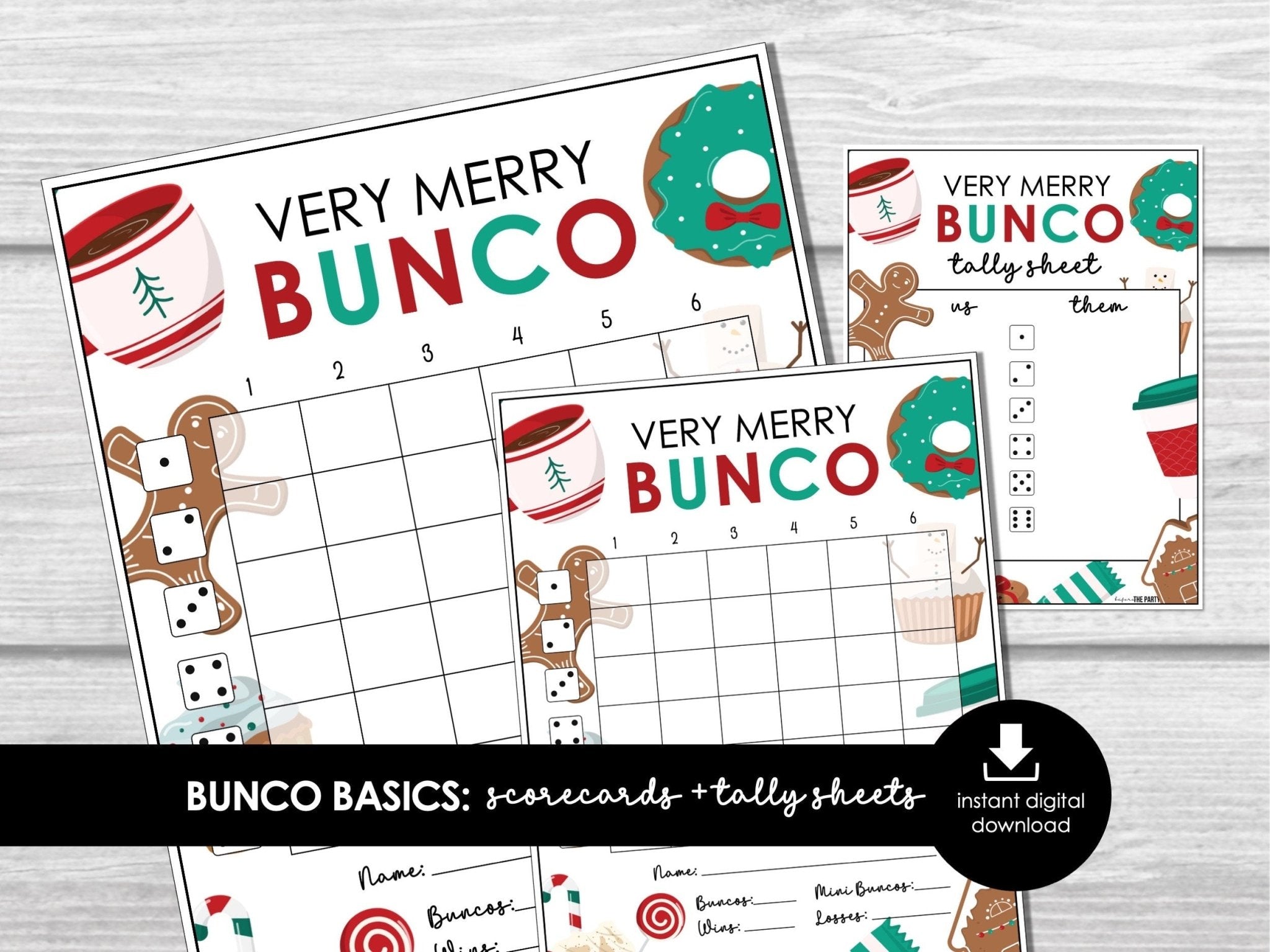
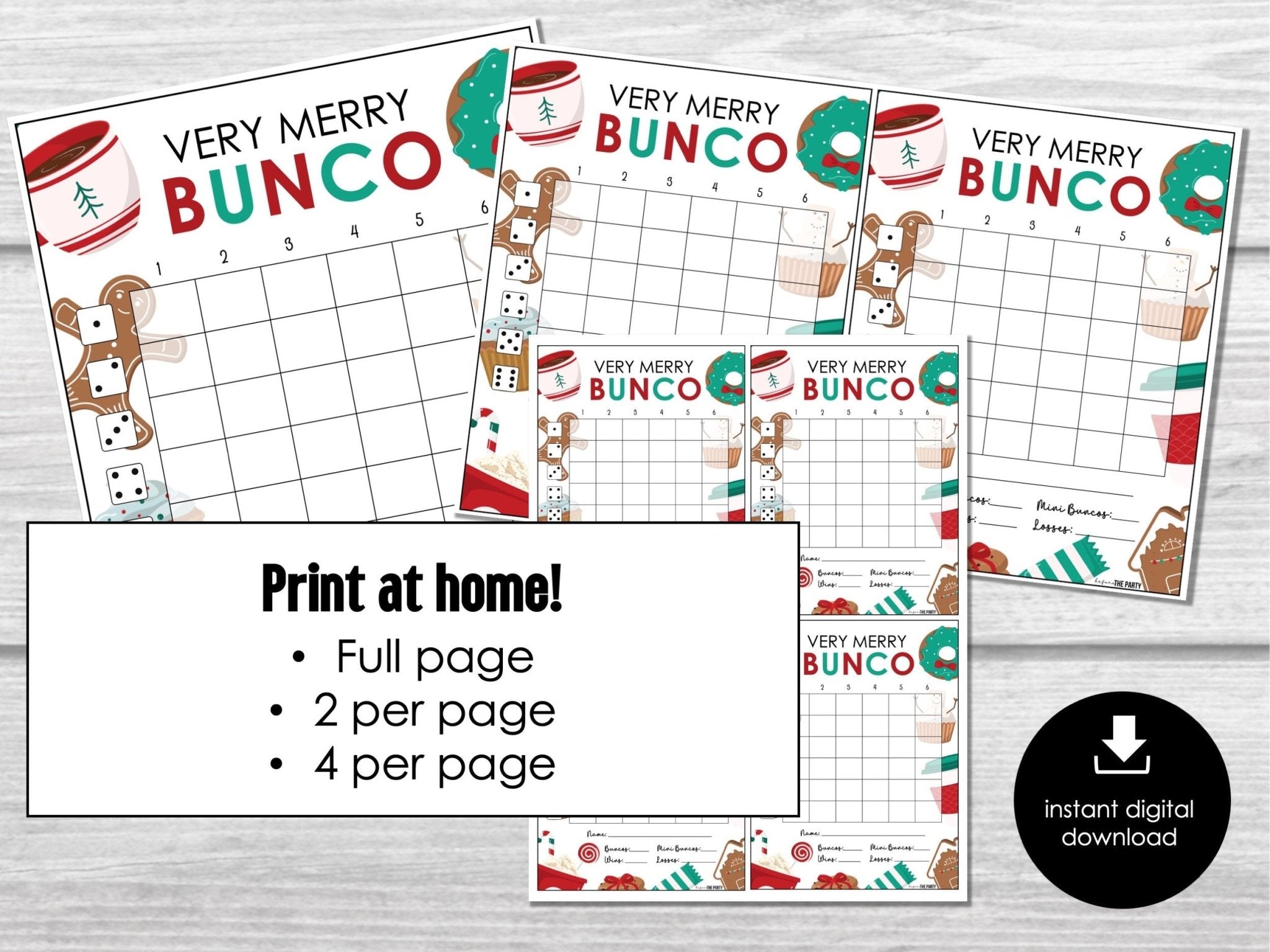
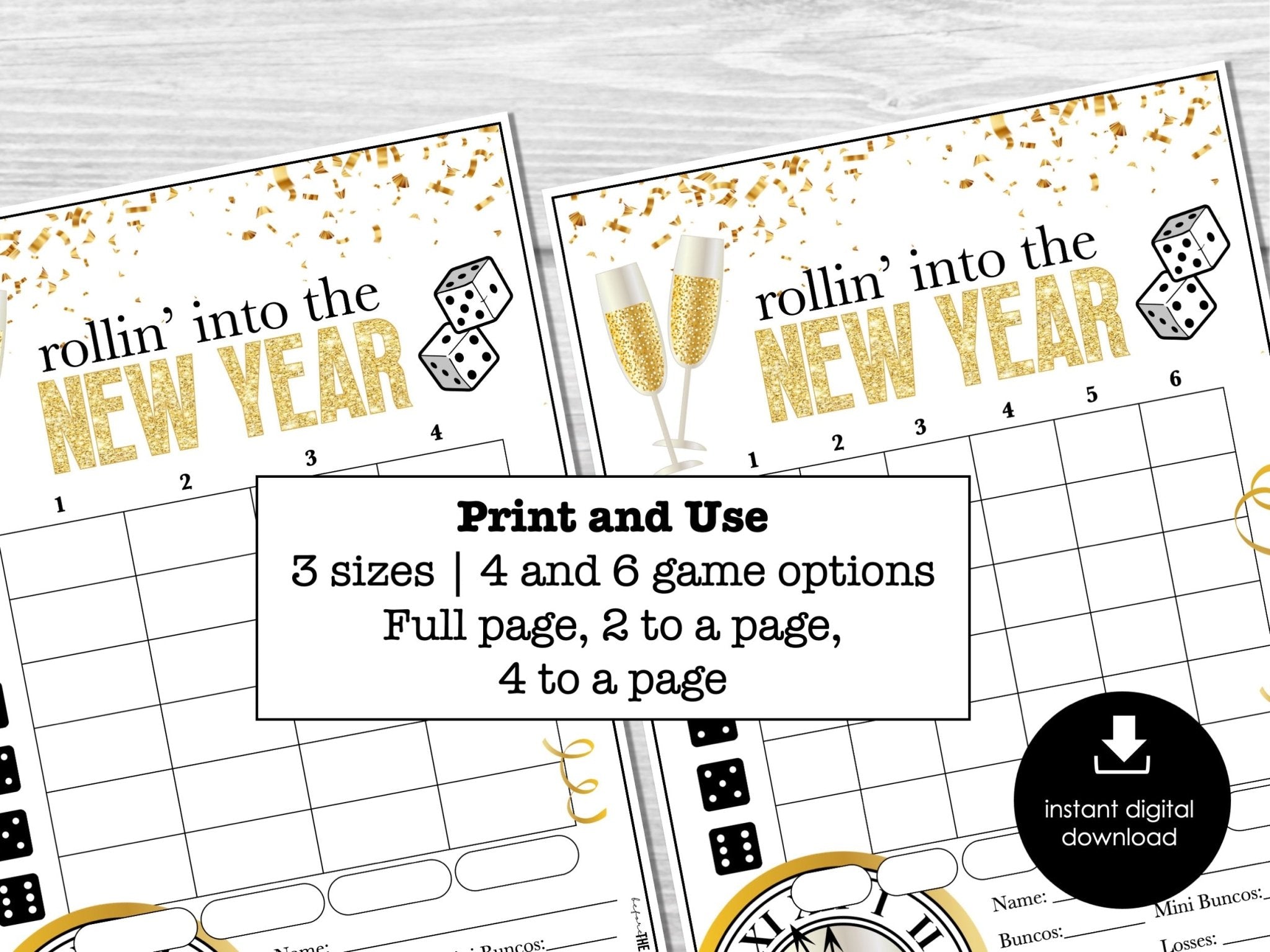
- Scorecards for tracking individual wins, losses, and Buncos
- One tally sheet for each table
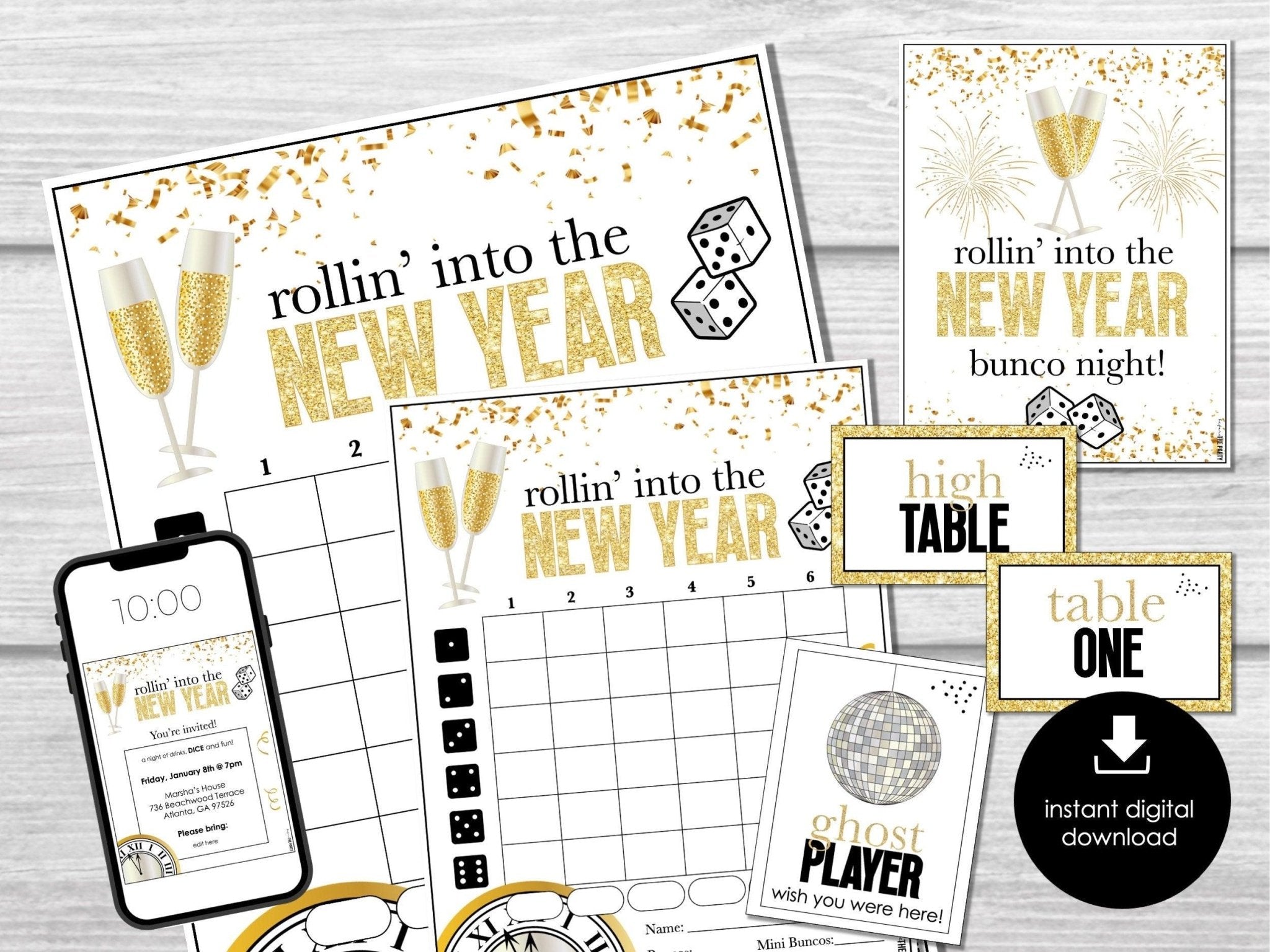
- Table number signs and an easy-to-see rules sheet
- Optional prizes for the end of the game
Affiliate disclosure: As an Amazon Associate, I earn from qualifying purchases. The Amazon links below are affiliate links, which means I may earn a small commission at no extra cost to you.
If you need to finish your setup, these Amazon searches make it easy to find sets of colorful dice, a small game-table bell, and pencils for scorecards.
Printable Scorecards for a Classic Game Night
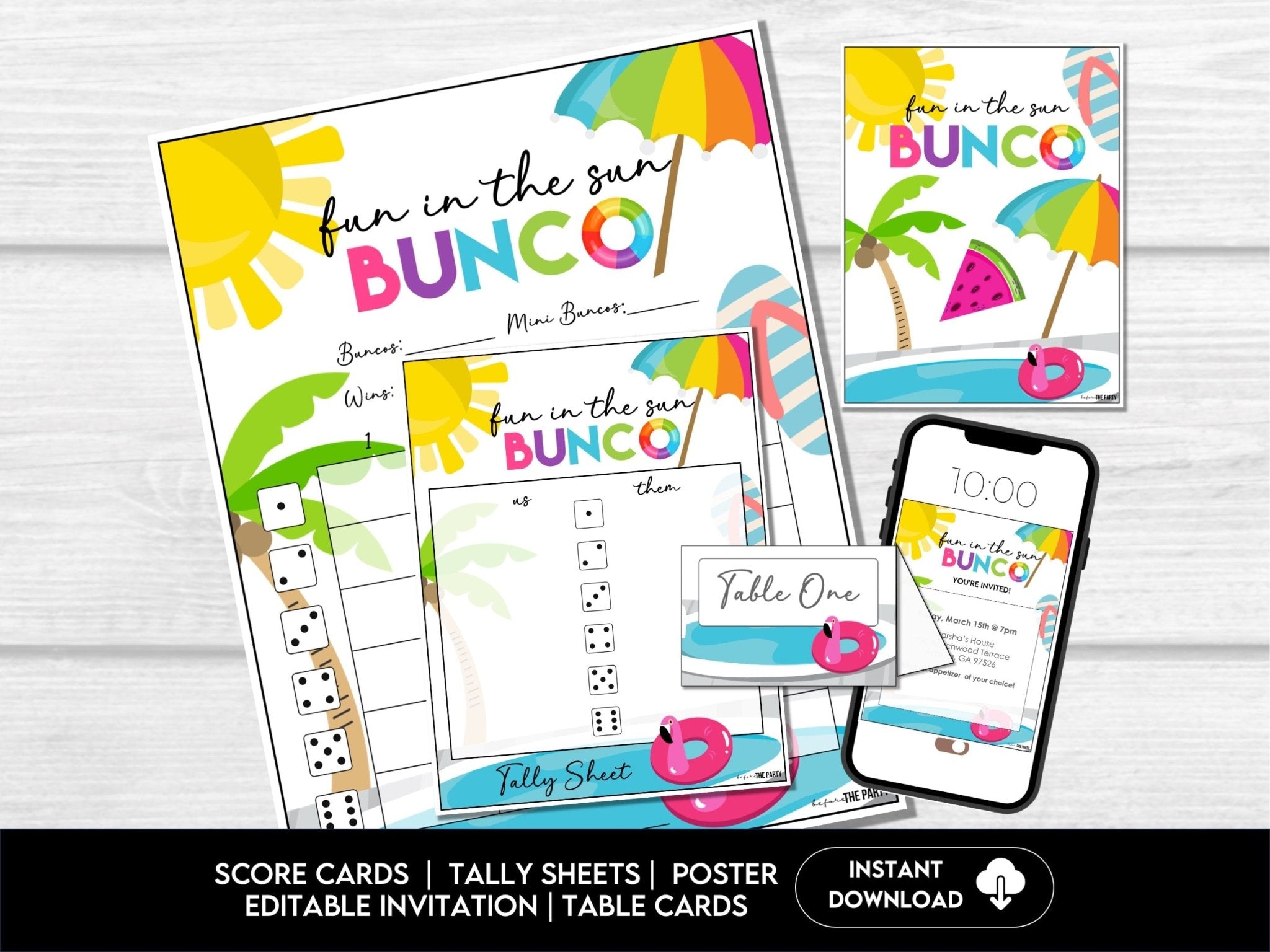
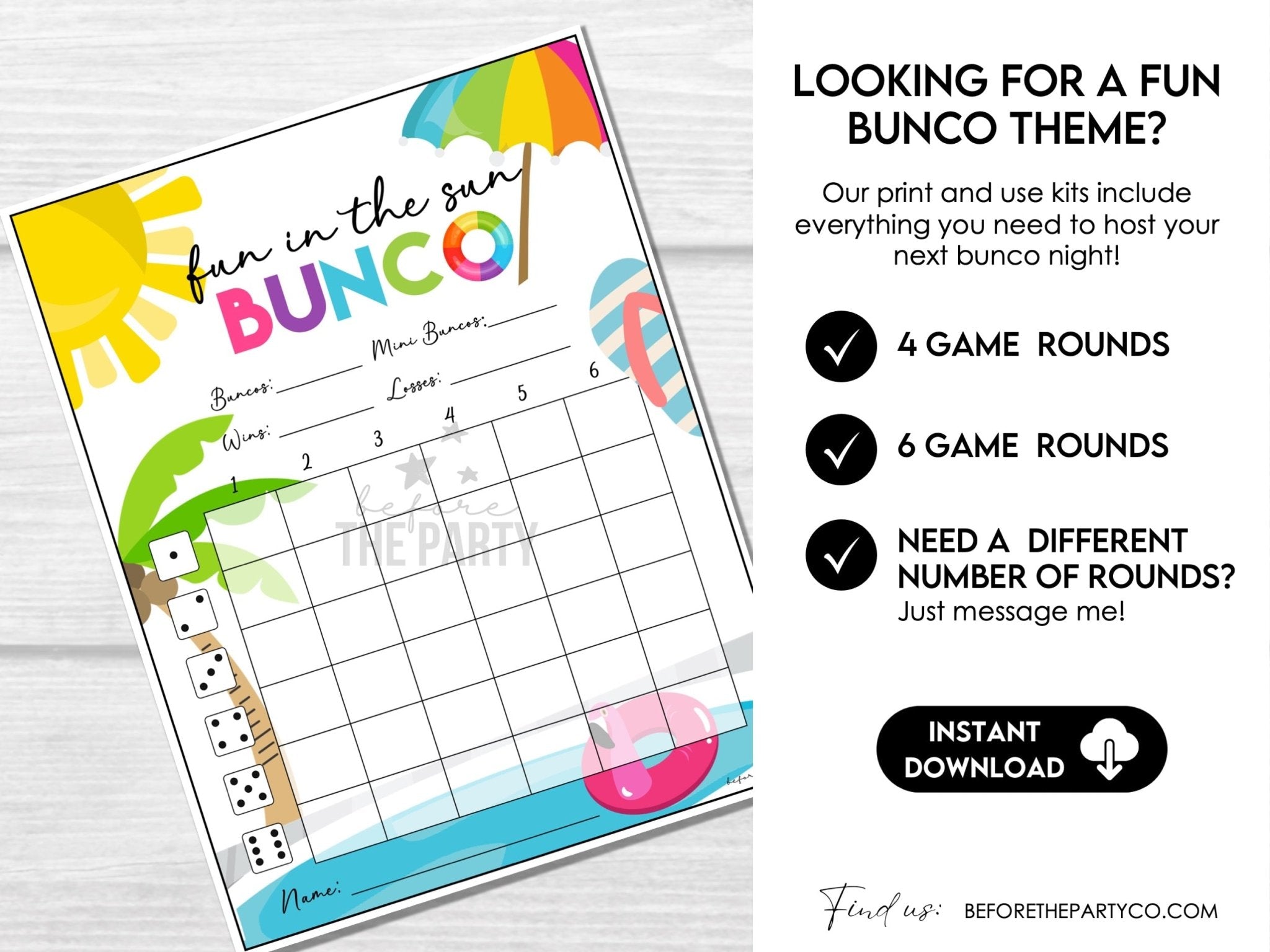
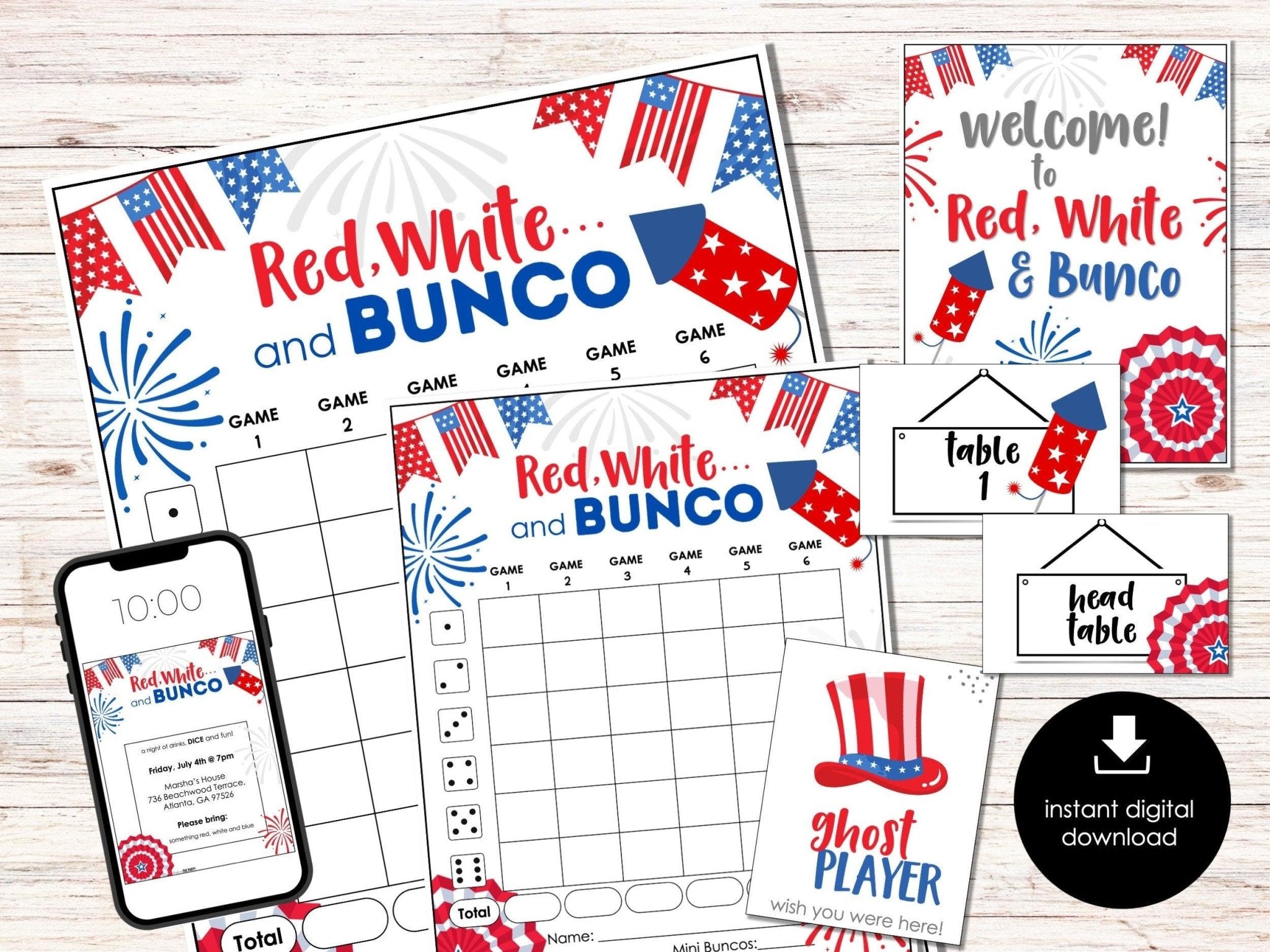
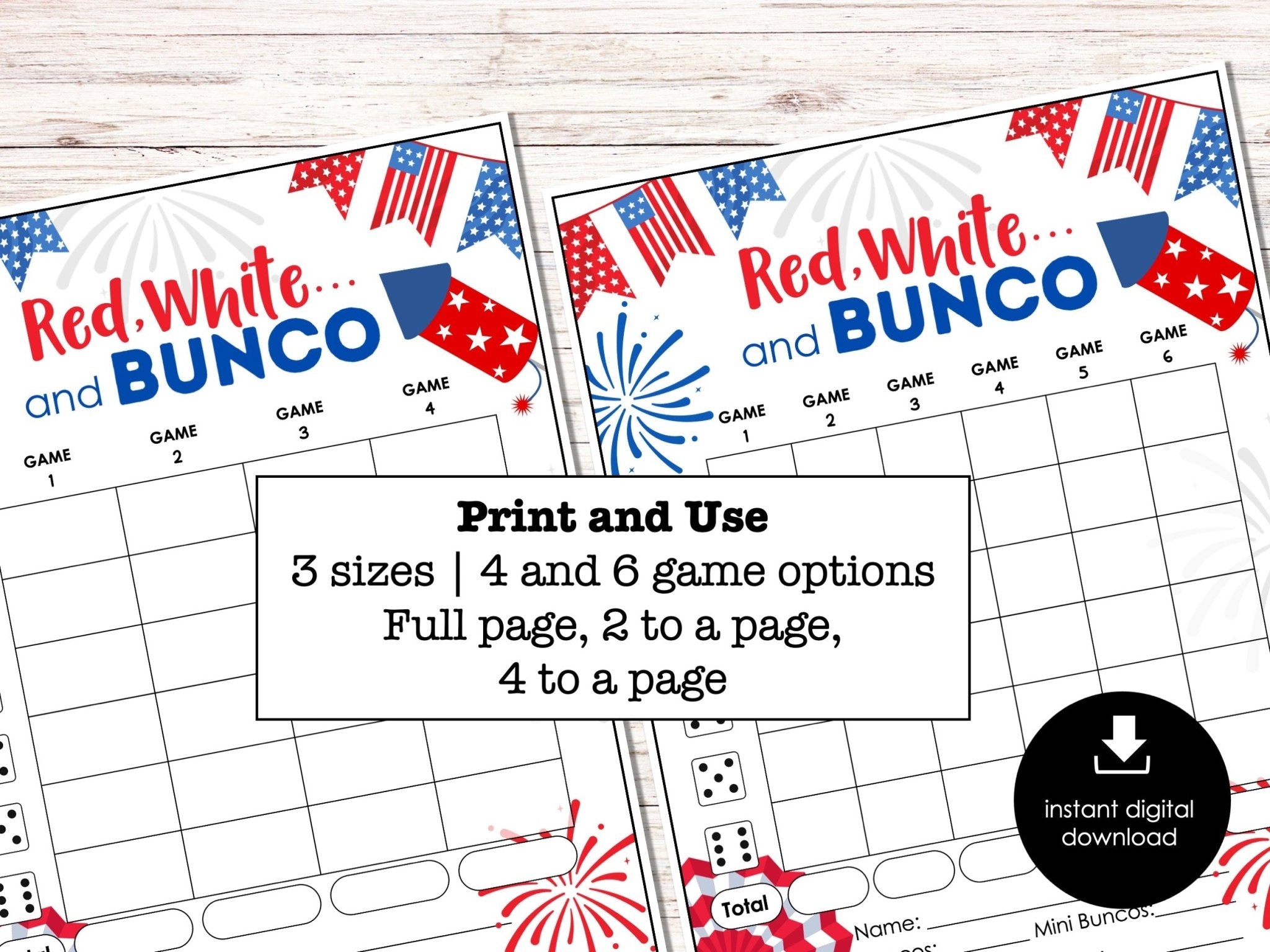
Place one card and pencil at every seat before guests arrive. These Ladies Game Night Bunco Score Cards add bright color while keeping scoring easy to follow.

Shop the Ladies Game Night Score Cards
How to Set Up a Bunco Game
1. Arrange Three Tables
Label the tables Head Table, Table 2, and Table 3. Place four players at each table. The two people sitting across from each other are partners for that round.
The Head Table controls the pace of the game. Place the bell at this table and choose one person to keep its team tally.
2. Put Supplies at Every Table
Each table needs three dice, a tally sheet, and a pencil. Give every guest an individual scorecard. A printed rules sheet at each table prevents repeated questions and keeps the host from having to act as referee.
3. Choose the Starting Teams
You can assign seats randomly, draw table numbers, or let guests choose their first seats. Partners will change throughout the game, so there is no advantage to starting with a particular person.
A Fun Scorecard Option for Experienced Groups
Once everyone understands the scoring, the scorecards can become part of the party theme. The Retro Pop Art Bunco Score Cards bring a playful vintage look to the tables.

Shop the Retro Pop Art Bunco Score Cards
How Bunco Scoring Works
Each round has a target number. In round one, players score by rolling ones. In round two, they score by rolling twos. Continue in order until round six.
- One die matches the round number: 1 point
- Two dice match the round number: 2 points
- Three matching dice that are not the round number: 5 points, often called a Mini Bunco or Baby Bunco
- Three dice match the round number: 21 points and one Bunco for the player
- No scoring combination: 0 points and the dice pass to the next player
Example: During round four, rolling 4-4-2 earns two points. Rolling 3-3-3 earns five points. Rolling 4-4-4 is a Bunco and earns 21 points.
How to Play a Round of Bunco
- The Head Table rings the bell to begin the round.
- One player at each table rolls all three dice.
- If the roll scores, that player adds the points to the team tally and rolls again.
- If the roll does not score, the dice pass clockwise to the next player.
- Partners combine their points on the table tally sheet.
- When one team at the Head Table reaches 21 points, someone rings the bell to end the round.
- Finish the roll already in progress at the other tables, then compare team totals.
- Each player marks a win or loss on their individual scorecard and records any Buncos they rolled.
Because a Bunco is worth 21 points, rolling one at the Head Table will usually end the round immediately. At another table, it adds 21 points to that team’s total, but play continues until the Head Table rings the bell.
How Players Rotate Between Tables
Rotations help everyone change partners and mingle during the game. A commonly used rotation is:
- The winning team at the Head Table stays at the Head Table but changes partners.
- The losing team at the Head Table moves to Table 3.
- The winning team at Table 2 moves up to the Head Table.
- The winning team at Table 3 moves up to Table 2.
- The losing teams at Tables 2 and 3 stay where they are.
- At each table, switch seats as needed so everyone has a new partner.
Some groups use a simpler “winners move, losers stay” system. Either method works. Print or announce your rotation rule before play begins so no one has to guess after the bell rings.
How Many Rounds Are in Bunco?
One set contains six rounds, beginning with ones and ending with sixes. Many groups play two to four sets in one evening. For a shorter game, play one or two sets. For a full party night, plan on three sets with a snack break between sets.
At the end of each set, return to round one and begin scoring ones again. Individual scorecards continue for the entire game.
How Do You Win Bunco?
Bunco is often played for several prize categories rather than one overall champion. At the end of the game, collect the scorecards and total each player’s results. Popular prize categories include:
- Most Buncos
- Most Wins
- Most Mini Buncos
- Fewest Wins or Most Losses
- First Bunco or Last Bunco
- Traveling Bunco, if your group uses that variation
Keep prizes small and playful. Gift cards, candles, snacks, mugs, and themed favors all work well. You can browse easy Bunco prize ideas on Amazon if you want several options in one place.
What If You Do Not Have 12 Players?
Twelve players create the classic three-table setup, but a last-minute cancellation does not have to stop game night. Many groups use a “ghost” player. The ghost’s partner rolls for both positions and follows the same scoring rules. Rotate the ghost just like a regular player.
For smaller casual groups, you can also play at one or two tables and keep the same rolling and scoring rules. Just agree on how each round will end—such as when the leading team reaches 21—and adjust rotations to fit the number of players.
Common Bunco House Rules to Decide Before You Play
There are many regional and group variations. Before the first bell, clarify:
- Whether Mini Buncos are worth five points
- Whether the round stops immediately or completes the current roll after the bell
- How ties at Tables 2 and 3 are broken
- Which table-rotation pattern your group will use
- Whether you will use a traveling Bunco item
- How many sets you plan to play
- Which scorecard categories receive prizes
A quick roll-off is the easiest way to break a tie: one player from each team rolls all three dice, and the highest total wins.
Bunco Rules FAQ
Do you need exactly 12 people to play Bunco?
No. Twelve is the traditional number, but you can use a ghost player for an empty seat or adapt the game for fewer tables.
Do you keep rolling after scoring?
Yes. A player continues rolling as long as each roll earns at least one point. The dice pass when a roll scores zero.
What is a Bunco worth?
Three of the current round number is a Bunco worth 21 points. The player also marks one Bunco on their individual scorecard.
What happens when the bell rings?
The round ends. Complete any roll already in progress, compare team totals, record wins and losses, and rotate players according to your chosen rules.
How long does a Bunco game take?
Most Bunco nights last about two to three hours, including setup, snacks, conversation, and multiple six-round sets.
Another Ready-to-Print Bunco Set
For a funny no-season theme, use the Bunco Definition Printable Party Set. It includes coordinated game materials and works well for monthly groups, neighborhood gatherings, and casual girls' nights.

Shop the Bunco Definition Printable Party Set
Your Beginner Bunco Checklist
- Choose your players and arrange three tables
- Place three dice, a pencil, and a tally sheet at every table
- Put the bell at the Head Table
- Give each guest an individual scorecard
- Explain scoring and rotations before the first round
- Decide on house rules and prize categories
- Ring the bell, start rolling, and have fun
Once the tables are organized, Bunco practically runs itself. Ready-to-print scorecards, table signs, tally sheets, and rules make the night even easier—especially when several guests are playing for the first time. Visit Before The Party to find Bunco printables that help you host a smooth, organized game night.